A Call for Support and Partnership.
We are at a critical juncture.
If we act now, we can change life timelines for thousands of tribal adolescents. Instead of early labour, they can pursue learning.
Instead of forced marriage, they can make informed choices. Instead of repeating cycles of poverty, they can build better futures — for themselves, and for their communities. This requires targeted funding, long-term partnerships, and a belief in the potential of every child — regardless of where they are born. Let us not wait for another child to drop out or be pushed into marriage. Let us stand with them now — and invest in their right to dream.
Listening to Young Voices: Understanding the Lives,Hopes, and Challenges of Adolescents in Tribal Communities
A Field-Based Narrative from Alirajpur, Bhavra, and Petlawad (Jhabua District)
1. Background and Purpose
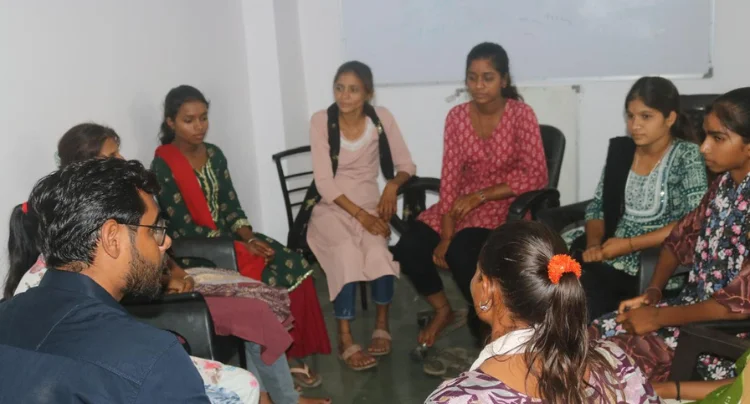
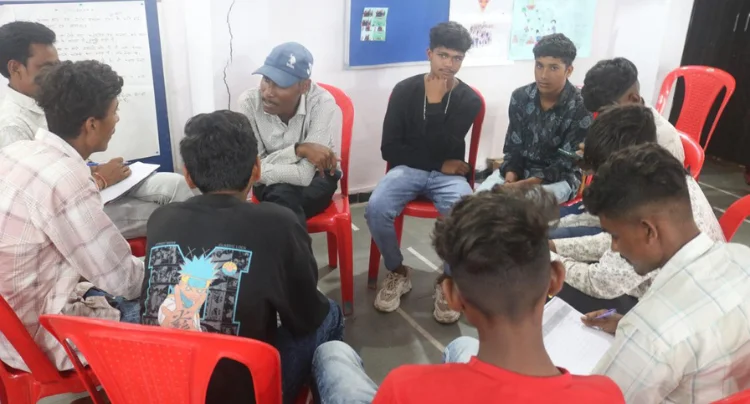
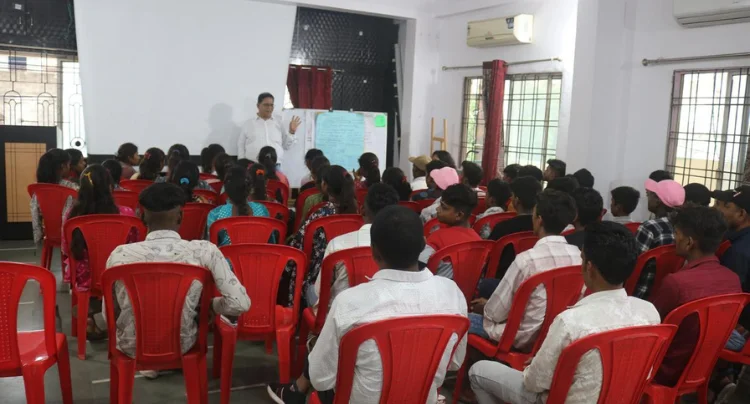
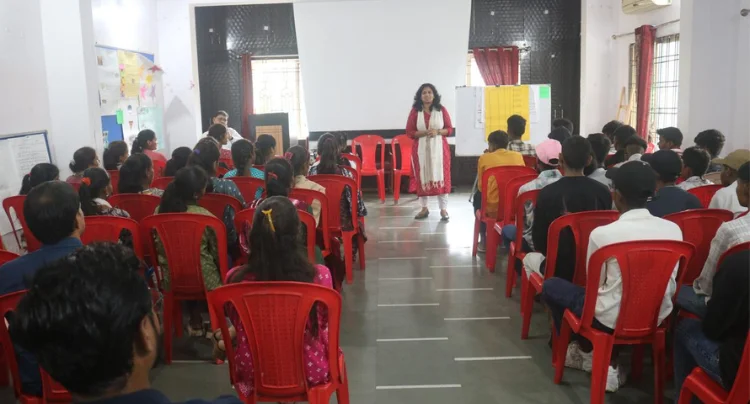
In the tribal pockets of Alirajpur and Jhabua, children grow up too fast. Amid poverty, limited educational access, and traditional pressures, their adolescence is often cut short — traded for labour, marriage, and parenthood. To understand their reality, perception and perspectives a series of group discussions were conducted with 43 boys and 38 girls, along with insights from 2 Filed coordinators,4 community mobilizers, across Bhavra, Alirajpur, and Petlawad. The participants were a mixed group of children who are less career focused, a few are career focused and doing professional courses like ITI and nursing and some are yet drop outs etc.
The goal was to explore how adolescents perceive important life events such as education, marriage, career opportunities, understanding on the career processes, the right age of marriage, bearing children and family responsibilities — and what choices they truly have in shaping their own futures, how is it influenced etc.
2. Life Patterns in Tribal Communities: A Timeline That Speaks
The adolescents mapped out a life timeline — and what emerged was deeply significant:
- Start working: As early as 13 years
- Marriage: Often by 15 or 16, for both boys and girls
- Become parents: By 18, many already have two children
- Become grandparents: Around 34–35 years
- Work till end of life: Labour continues till 65, with vulnerability to illness after 50
- Life expectancy: In some areas, people live up to 62; in others, even less
This cycle repeats — with little opportunity to break free, especially for those without access to continued education.
3. The Reality of Education and Exposure
Access to education is deeply unequal:
- Only 50% of children are able to continue education up to 14 years of age.
- Out of these, just 20% study till 18 years (with a boy-to-girl ratio of 70:30).
- Of those few who reach college or vocational training, only about 20% (mostly boys) continue beyond 20 years — and that too, only when given opportunity and support.
The gap in exposure, guidance, and awareness is wide — especially for girls.
- Boys continuing higher education mentioned careers such as police, patwari, doctor, army,etc.
- Girls, on the other hand, named only tailoring or nursing, showing how narrow their career horizons remain.
Children not in school had no career plans or life goals, and their ability to express thoughts or navigate decisions was significantly limited compared to their peers still studying.
4. Marriage, Pressure, and Gendered Expectations
Marriage continues to be viewed not as a choice, but a social and family-imposed milestone.
- Girls were acutely aware that continuing education after marriage was difficult. Most hadonly a basic understanding of consequences — such as early childbirth — but were unaware of the broader health risks or legal rights.
- Boys (pursuing higher education) expressed a preference to marry after becoming financially independent. Some even said, “marriage should happen only after graduation.” While those who are perusing professional courses opined that they should marry only after they start earning and would prefer to marry financially independent girl.
- Both boys and girls preferred partners who were well-behaved, sober, not involved in substance abuse, and showed respect.
- Girls specifically mentioned avoiding boys who used drugs, dressed in extreme styles like opened buttons or extreme coloured hair, or showed disrespect.
- Boys who are not thinking about careers or having drop out or not willing to peruse higher- education mind set were not having much choices, they were ready to accept what the family and community decides.
- Both boys and girls who are career focused feel that they have their own choices and decisions as regard to their career and marriage to better extent.
- Both boys and girls agree that the current trend of elopement is not healthy for their society.
- Some boys who are not career focused expressed that they already have girlfriends and are looking opportunities to get married as soon as possible. While they are also not aware about their reproductive health concerns.
Despite this awareness, most girls admitted they cannot resist family or community pressure, especially once they turn 17 or 18.
5. When Choice Disappears: Vulnerability to Elopement and Abuse
Elopement among adolescents emerged as a coping mechanism — not rebellion.
Children explained:
- They felt unloved, unheard, and unsupported.
- Some children at 15 or 16, they believed they were mature enough to make decisions.
- Many girls and boys eloped not out of romance, but out of desperation and the desire for a better life partner in their lives.
Substance abuse is another major concern. Adolescents, especially those out of school and disconnected from structured systems, are increasingly exposed to addiction risks, further endangering their health, safety, and future.
6. The Silent Divide: Education as a Lifeline
One of the clearest insights from the discussion was this:
Education changes everything — how children think, what they dream of, and whether they see themselves as decision-makers or dependents.
Children continuing education:
- Spoke logically, confidently, and with awareness.
- Had clearer plans for careers, health, and family life.
- Were more likely to challenge social pressure and make informed decisions.
Children who dropped out or not career focused:
- Had limited vocabulary around rights, options, or aspirations.
- Felt helpless, and were more vulnerable to early marriage or unsafe migration.
7. Why We Must Intervene — And Now
These findings are not just data — they are a call for compassion, urgency, and investment. We are witnessing the dreams of adolescents being cut short — not because they lack potential, but because they lack support systems.
- Early marriage continues to steal childhoods — especially for girls.
- Lack of education and exposure narrows career possibilities and confidence.
- Family and community pressure leaves adolescents with no real say in their own futures.
- Substance abuse, elopement, and child labour are consequences of the void we’ve allowed to grow.
8. Recommendations for Action
We urgently need sustained, child-centered interventions, especially in tribal areas like Alirajpur and Jhabua.
A. Keep Adolescents in School
- Flexible learning programs and scholarships
- Life skills education and tutoring support
- Bridge programs for dropouts
B. Career Exposure and Mentorship
- Role model interactions and career fairs
- Vocational training for both boys and girls
- Career planning workshops
C. Gender-Sensitive Counseling and Health Education
- Focus on reproductive health and legal rights
- Safe spaces for girls to speak and learn
- Counseling for boys on masculinity and responsibility
D. Family and Community Engagement
- Sessions with parents to challenge early marriage norms
- Building youth circles and peer support groups
- Mobilizing local champions to change attitudes